
MAPPING PUBLIC SPACE THROUGH COMMUNITY PERSPECTIVES: WHAT WE LEARNED FROM THE PUBLIC SPACE CONSULTATION


How can cities create better public spaces if they don't first understand how people use them? The Public Space Living Lab (PSLL), under the Institute of Smart City and Management (ISCM), is developing a citywide repository of public spaces to better understand the distribution, accessibility, and quality of parks and recreational spaces across Ho Chi Minh City. While Geographic Information Systems (GIS) allow us to map where public spaces are located, understanding how people experience these places requires something equally important: listening to the community. |
This work responds to a growing urban challenge. Ho Chi Minh City currently provides approximately 0.6 m² of public space per resident, while the city's target is to increase this to 1 m² per person. For comparison, the World Health Organization (WHO) recommends approximately 9 m² of green public space per person. Addressing this gap requires more than creating new parks. It requires understanding whether existing public spaces are accessible, green, recreational, and responsive to the needs of the communities they serve.
As part of this effort, PSLL hosted a three-day public consultation at Lobby B1, Campus B of the University of Economics Ho Chi Minh City, from 22 to 24 June 2026. The consultation invited students and members of the community to share how they use public spaces, what they value most, and what they believe could be improved.
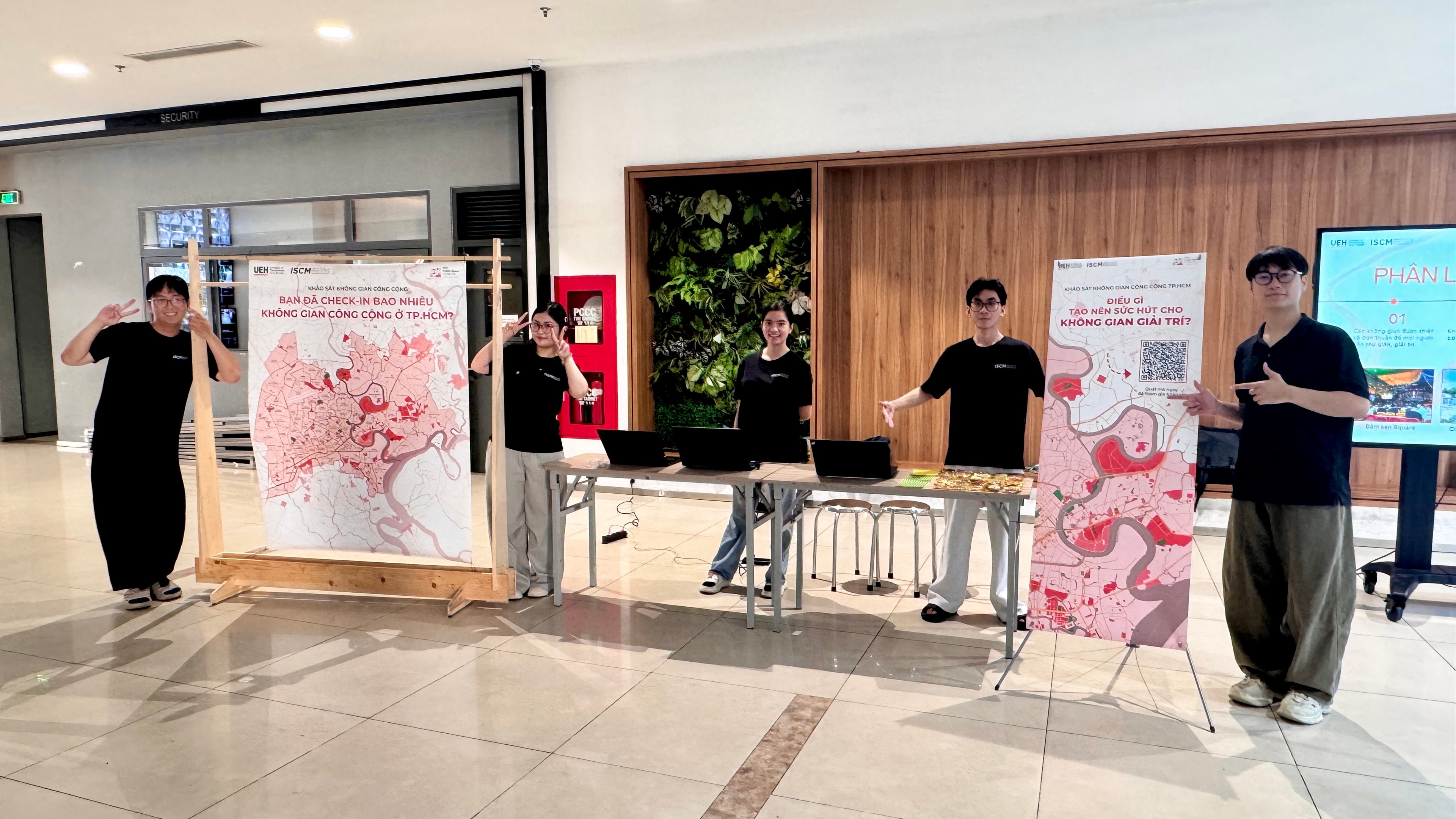
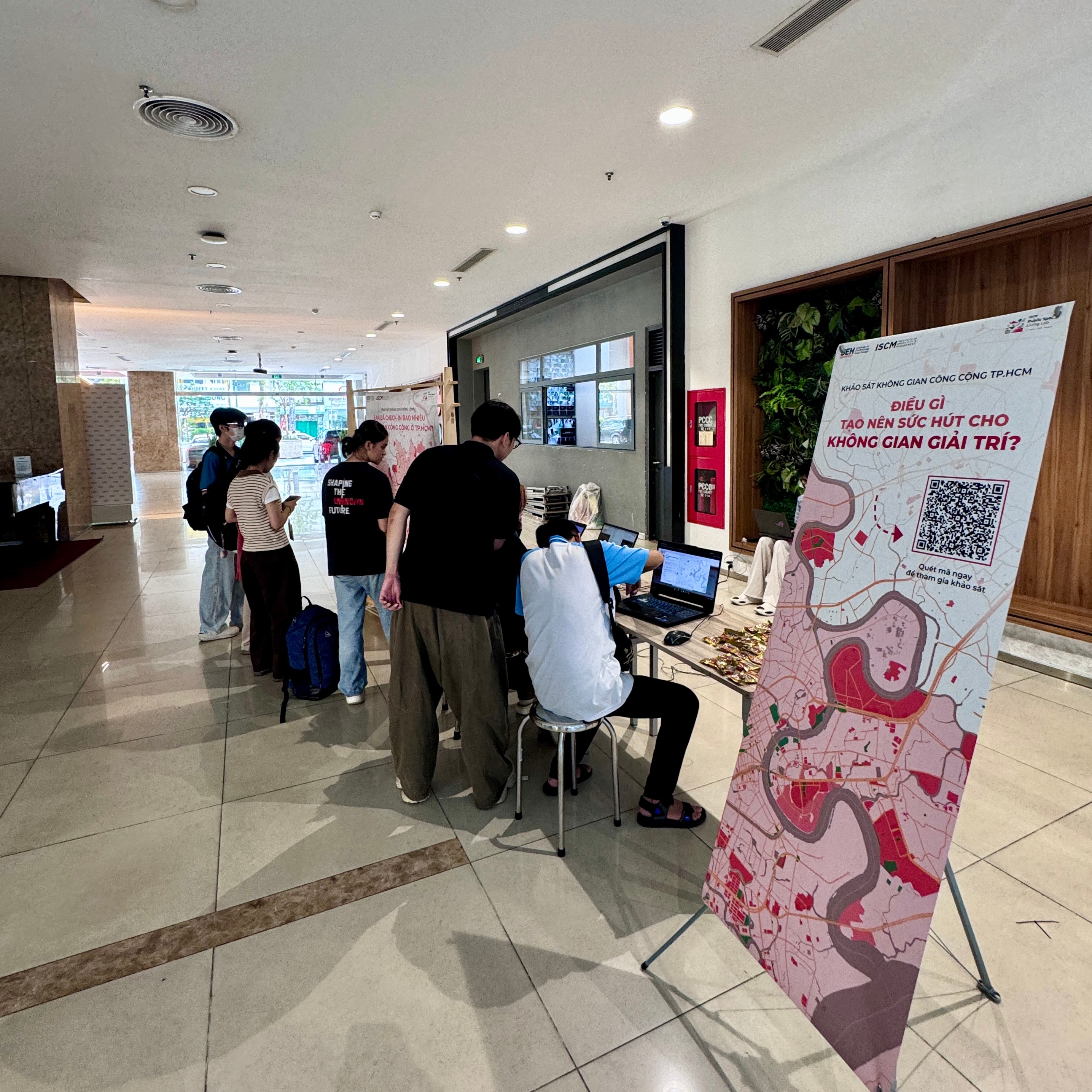
Throughout the three-day event, more than 200 participants visited the booth, contributing their experiences and perspectives on parks and recreational spaces across the city. Rather than simply collecting survey responses, the consultation created an opportunity for conversations about how people interact with public spaces in their everyday lives.
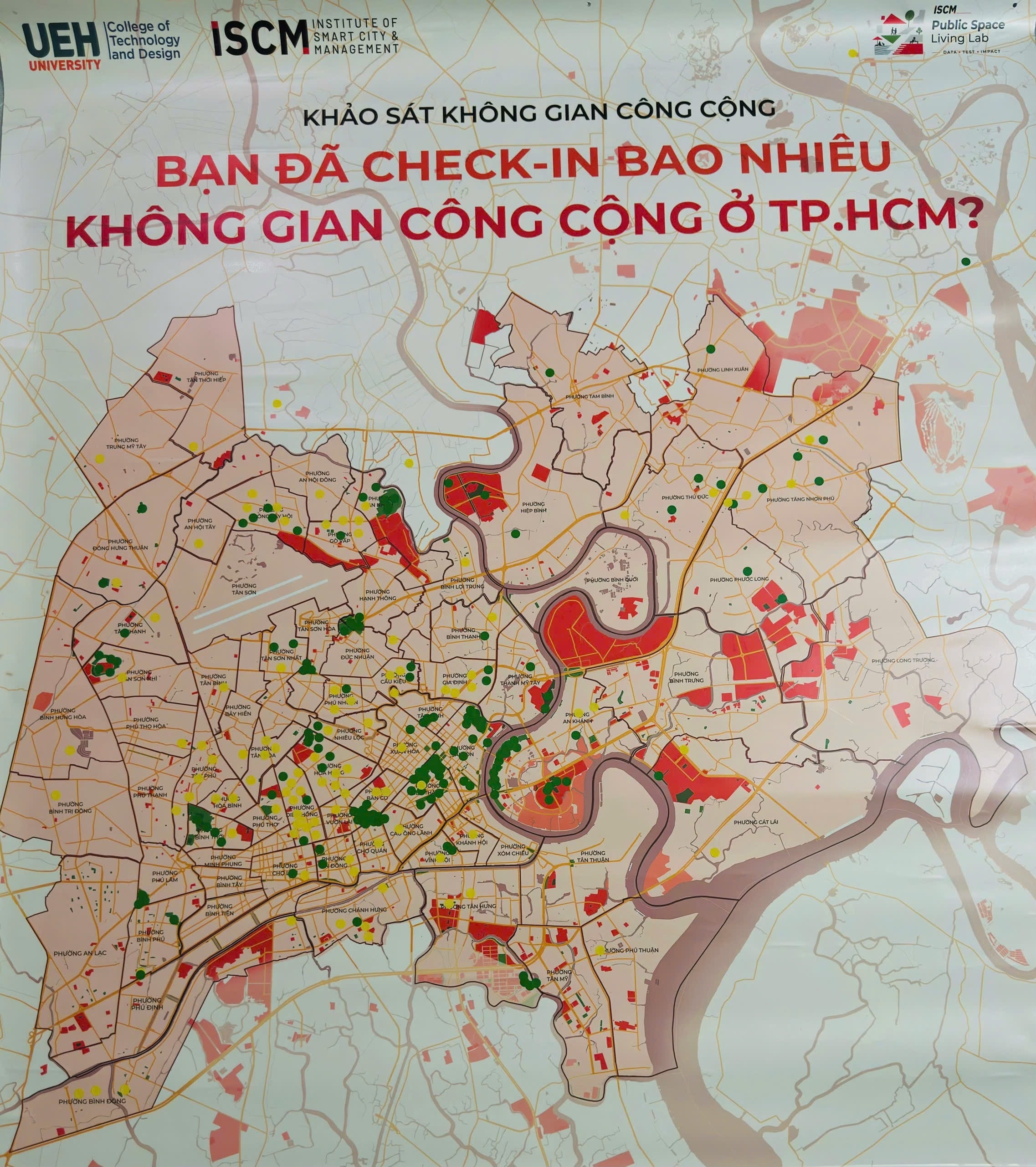
Participants explored an interactive map, identified where they live, and evaluated the public spaces they visit most frequently. These conversations provide an important layer of information that complements spatial analysis by helping us understand not only where public spaces are located, but also how they are experienced by the communities that use them.
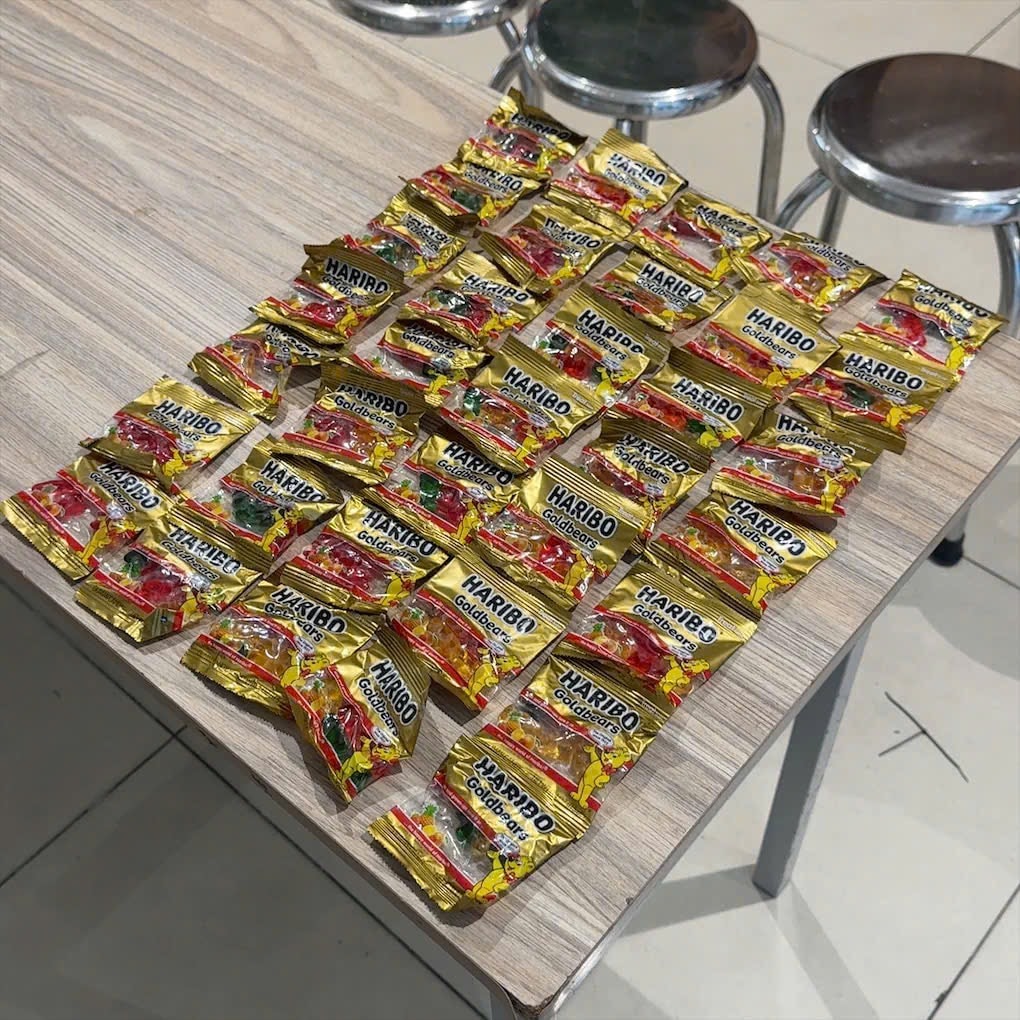
As a small token of appreciation, participants received Haribo gummies or lollipops after completing the activity.
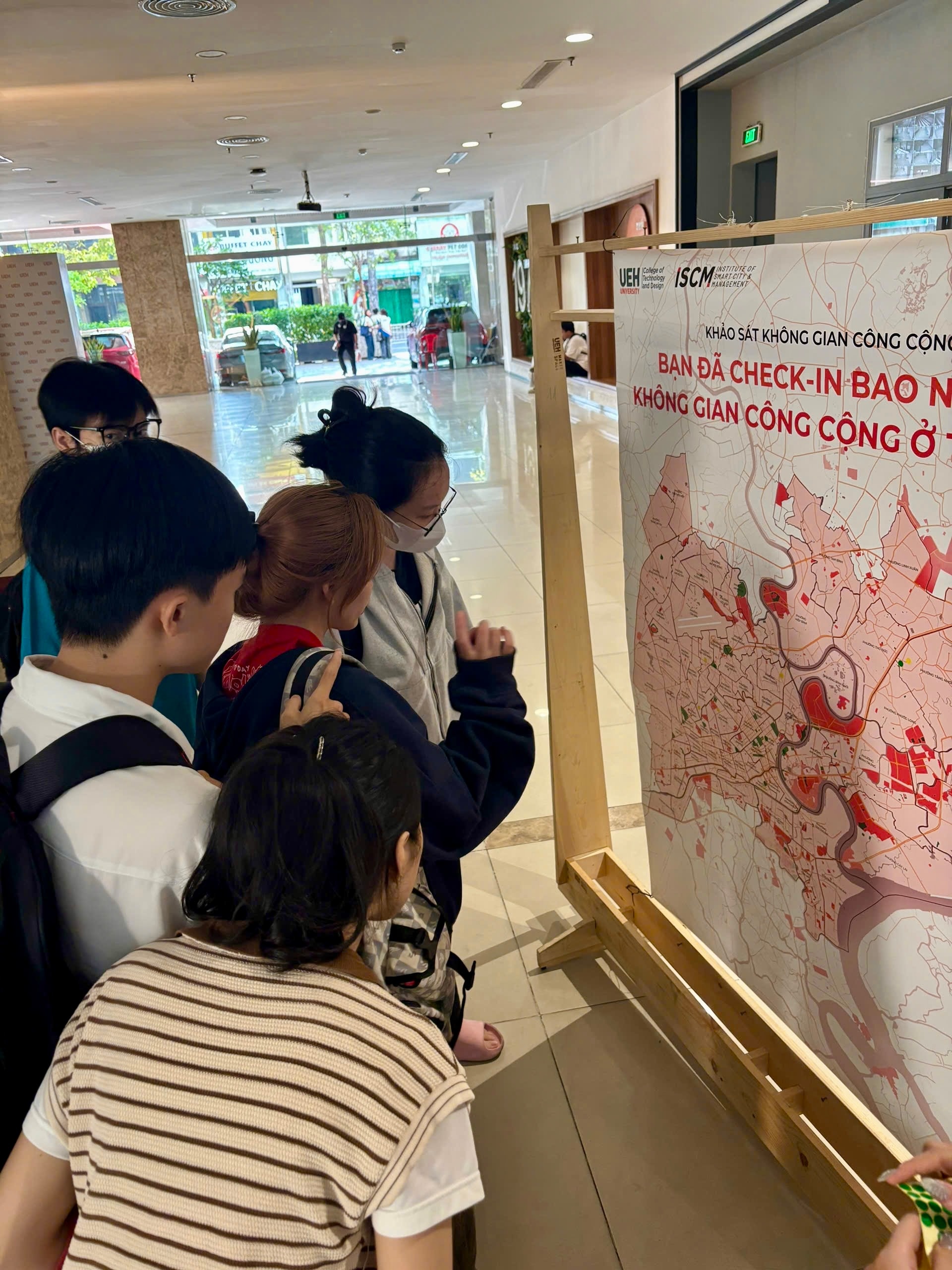
One of the highlights of the consultation was the large interactive map displayed at the booth. Participants placed yellow stickers to indicate where they live and green stickers to identify the public spaces they visit most often.
This simple activity revealed an interesting pattern. While many participants lived around Dien Hong Ward, they frequently travelled to parks in Sai Gon Ward rather than using those closest to home. Although these are still preliminary observations, they suggest that the quality of a public space may influence people's decisions just as much as its proximity.
Understanding these patterns is important. As Ho Chi Minh City continues to grow, providing public space is not only about increasing quantity but also about ensuring that parks and recreational areas are attractive, accessible, safe, and capable of meeting the needs of surrounding communities.
These community perspectives help us move beyond simply measuring how much public space exists. They help us understand which public spaces people actually choose to use, why they travel to them, and what characteristics make them successful. This type of evidence is essential for developing more equitable public space strategies across the city.

To date, the consultation has generated 637 individual evaluations of public spaces across both the in-person and online platforms. While just over 200 people participated in person, many chose to evaluate two or three different public spaces they regularly use, creating a much richer dataset than initially anticipated.
These contributions will help PSLL validate its growing repository of public spaces and better understand how residents perceive the city's recreational environments. Combined with GIS analysis and ongoing field validation, this information will support the identification of areas where future investment in quality public space should be prioritized.
What’s Next?
This consultation represents one step in PSLL's broader mission to support more evidence-based public space planning in Ho Chi Minh City. By combining GIS analysis, field validation, and community perspectives, the Lab is building a comprehensive repository of public spaces that goes beyond mapping locations to understanding how these spaces function in people's everyday lives.
Preliminary spatial analysis indicates that Ho Chi Minh City currently faces an estimated public space deficit of approximately 283 hectares. Considering projected population growth, this deficit could increase to more than 376 hectares by 2030 if additional public spaces are not developed.
Rather than focusing only on increasing the quantity of public space, PSLL aims to help identify which wards should be prioritized for future investment, based not only on the availability of public space, but also on its quality, accessibility, greenery, and recreational value. By providing this evidence base, the project seeks to support more informed planning decisions and contribute to a more equitable distribution of quality public spaces across the city.
Better public spaces begin with better evidence. By combining spatial data with community experiences, PSLL is helping build the knowledge needed to create greener, healthier, and more equitable cities.
While the Campus B consultation has concluded, the online survey remains open, and we continue to welcome contributions from residents across Ho Chi Minh City. Every new response helps strengthen the repository and improve our understanding of how public spaces are experienced throughout the city. Participate in the online survey: Public Space Living Lab Read the consultation report: Public Space Living Lab |
#UEH #CTD #ISCM #PSLL #KhaoSatCongDong #PublicSpace #SmartCity #UrbanPlanning #GlocalInnovation #SustainableLiving #SDG3 #SDG10 #SDG11 #SDG17