
Learning from Communities, Designing for the Future: BAUD K51 Students Explore Vernacular Architecture in the Central Highlands of Vietnam


A meaningful architectural project does not begin with drawings. It begins with an understanding of people, culture, and place.
This philosophy lies at the heart of the Bachelor of Architectural and Urban Design for Inclusive Smart City (BAUD) programme offered by the Institute of Smart City and Management (ISCM), University of Economics Ho Chi Minh City (UEH). Rather than limiting learning to design studios and classrooms, BAUD encourages students to engage directly with real-world contexts, observe local conditions, work alongside communities, and gain first-hand insights into contemporary challenges before proposing design solutions.
From 3–5 June 2026, K51 students participated in a field study trip to Buôn Ako Dhong in Buôn Ma Thuột City, Đắk Lắk Province, as part of their first architectural design studio project. The studio theme, “Vernacular Architecture: Glocal Innovation for Sustainable Living,” challenged students to investigate how indigenous knowledge and local identity can inspire contemporary architectural solutions. The studio was led by Ms. Trần Thị Quỳnh Mai, MA; Dr. Hoàng Ngọc Lan; Dr. Huỳnh Văn Khang; and Mr. Đỗ Lê Phúc Tâm, MA.
Often described as “a traditional village within the city,” Buôn Ako Dhong represents one of the most distinctive cultural landscapes of Vietnam’s Central Highlands. The village retains many elements of Êđê cultural heritage, including traditional longhouses, indigenous spatial organization, and community-based ways of living, despite ongoing urbanization. As such, it serves as an ideal Living Lab where students can explore vernacular architecture, sustainable development, and human-centred design in an authentic context.
Throughout the three-day fieldwork programme, students documented local living environments, studied the spatial characteristics of Êđê longhouses, investigated indigenous construction materials, analysed climate-responsive design strategies, and explored the cultural values embedded within the community. They also engaged with local authorities, met village elders, and listened to stories about the history, development, and current challenges facing Buôn Ako Dhong.
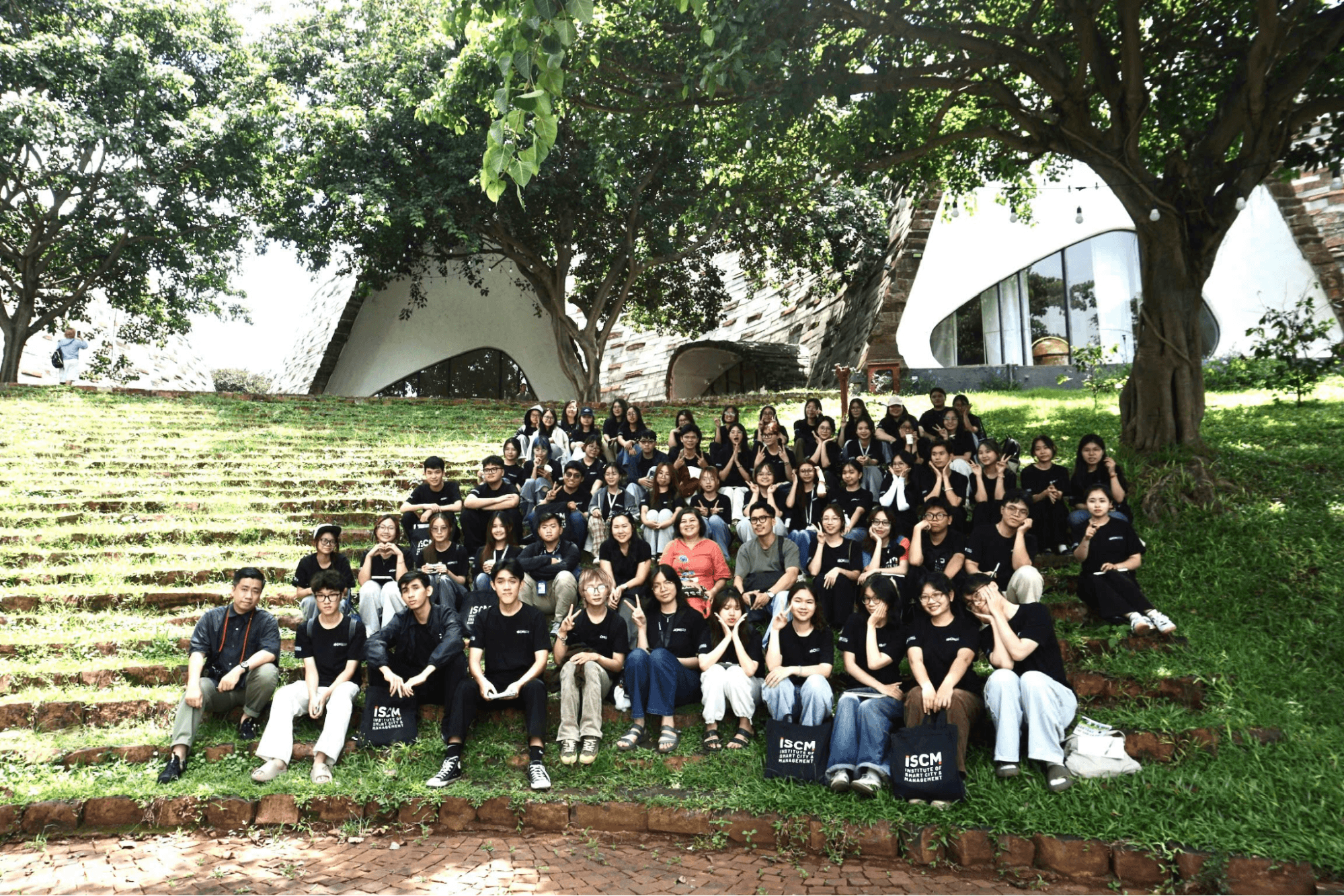
ISCM lecturers and students at the Coffee World Museum.
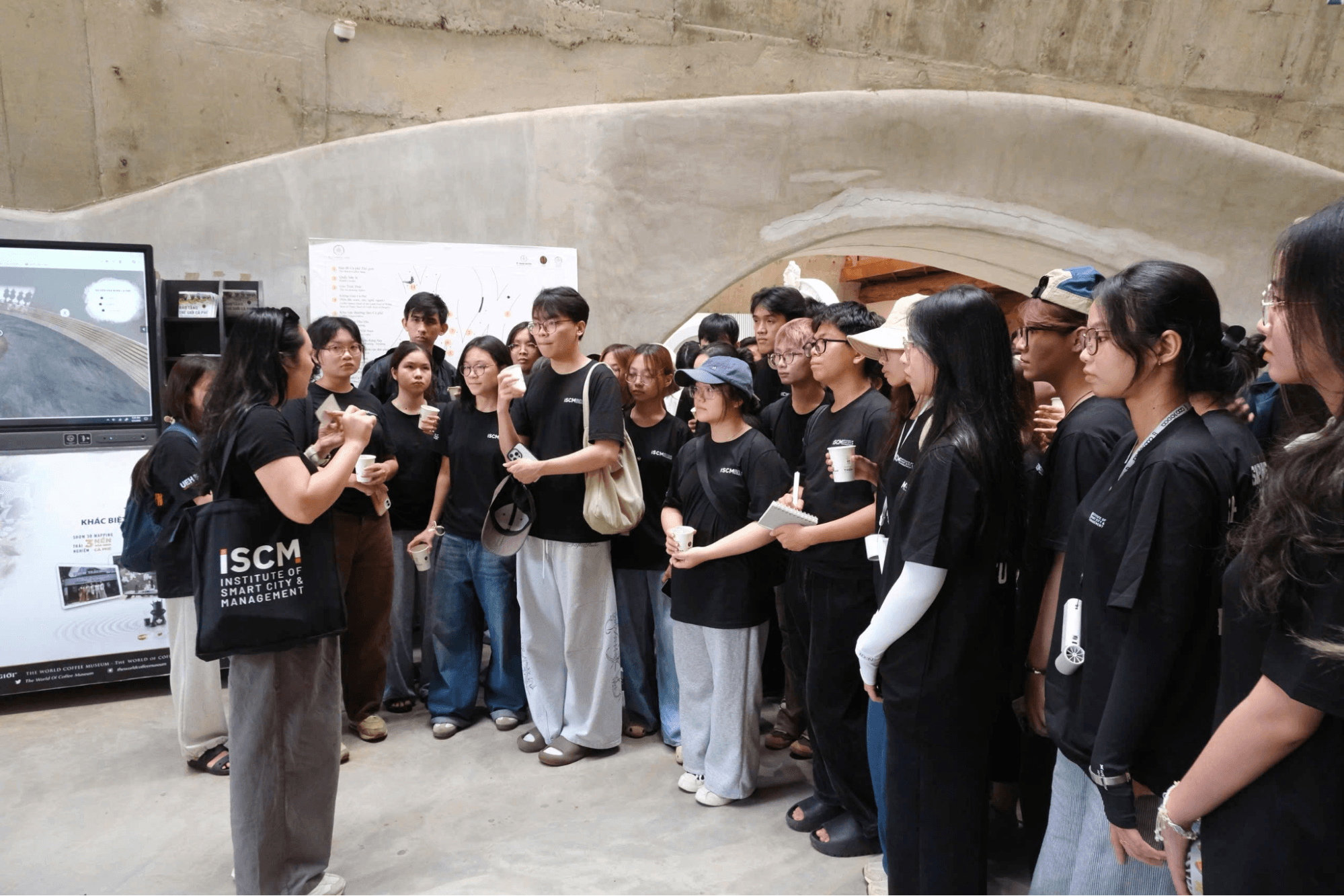
The lecturer shared her experiences with students on data collection methods at the Coffee World Museum.
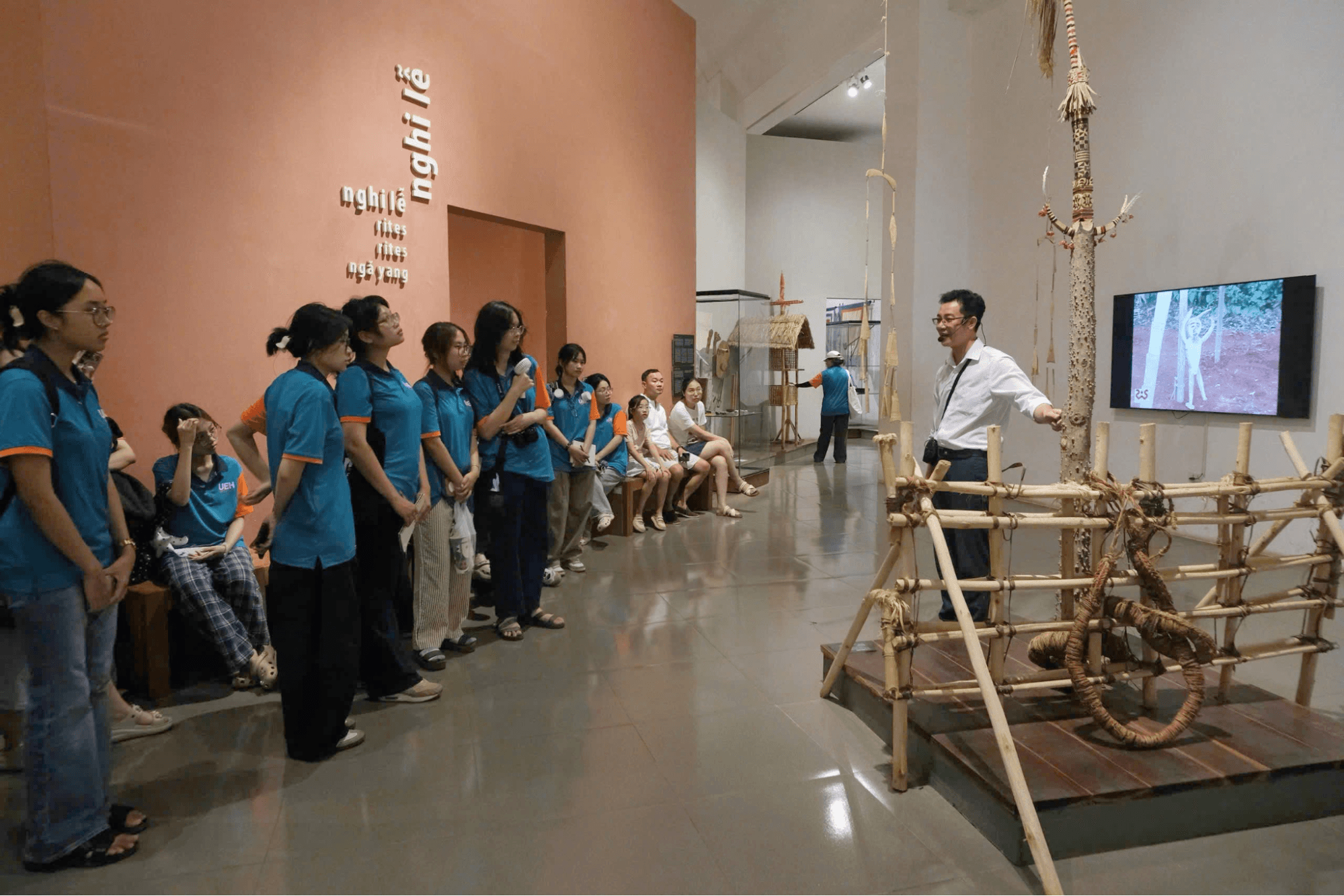
Students listening to the museum guide’s introduction to the architectural spaces and exhibition displays at the Đắk Lắk Museum.
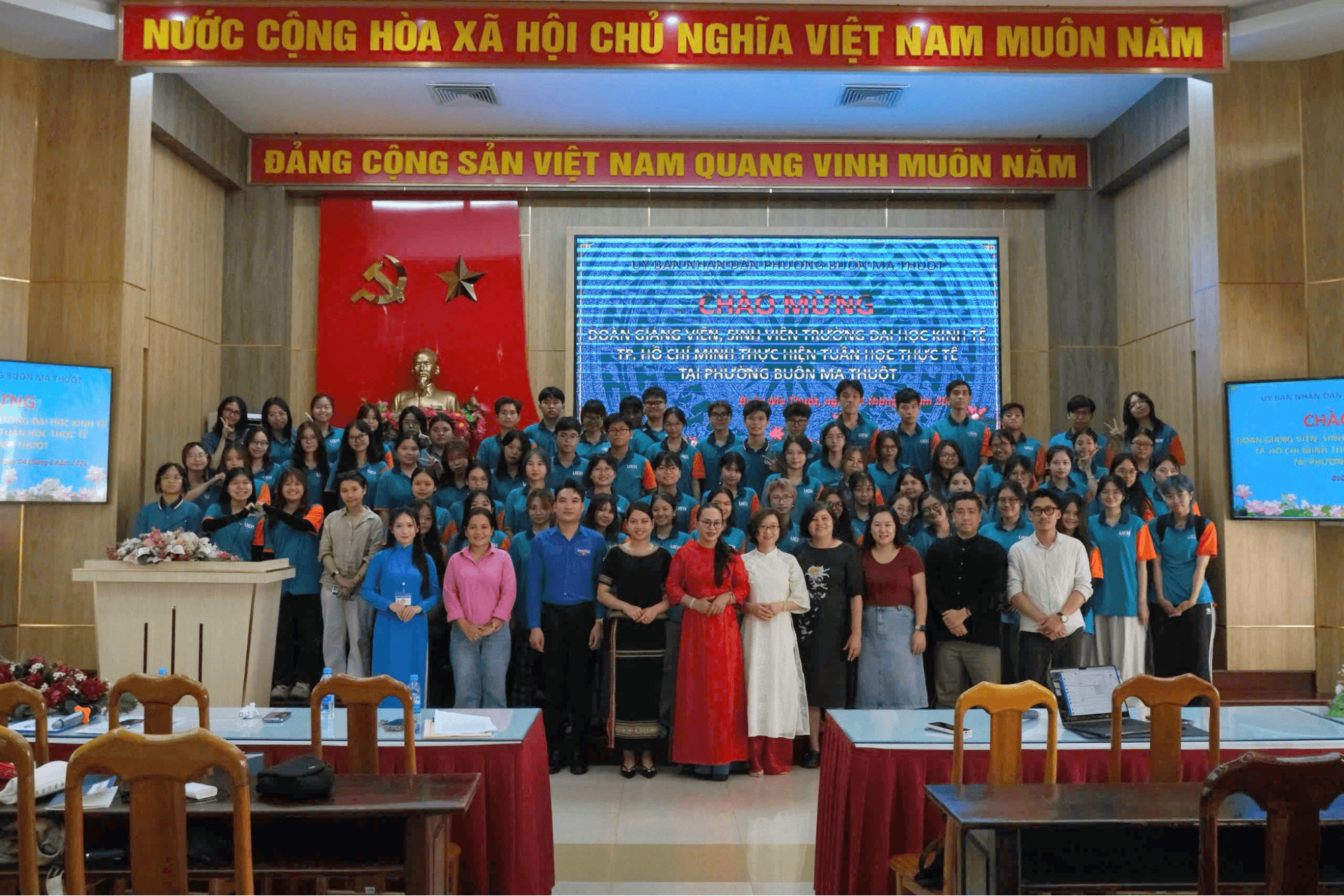
Students meeting and engaging in discussions with local authorities from Buon Ma Thuot Ward on the cultural heritage and historical development of Ako Dhong.
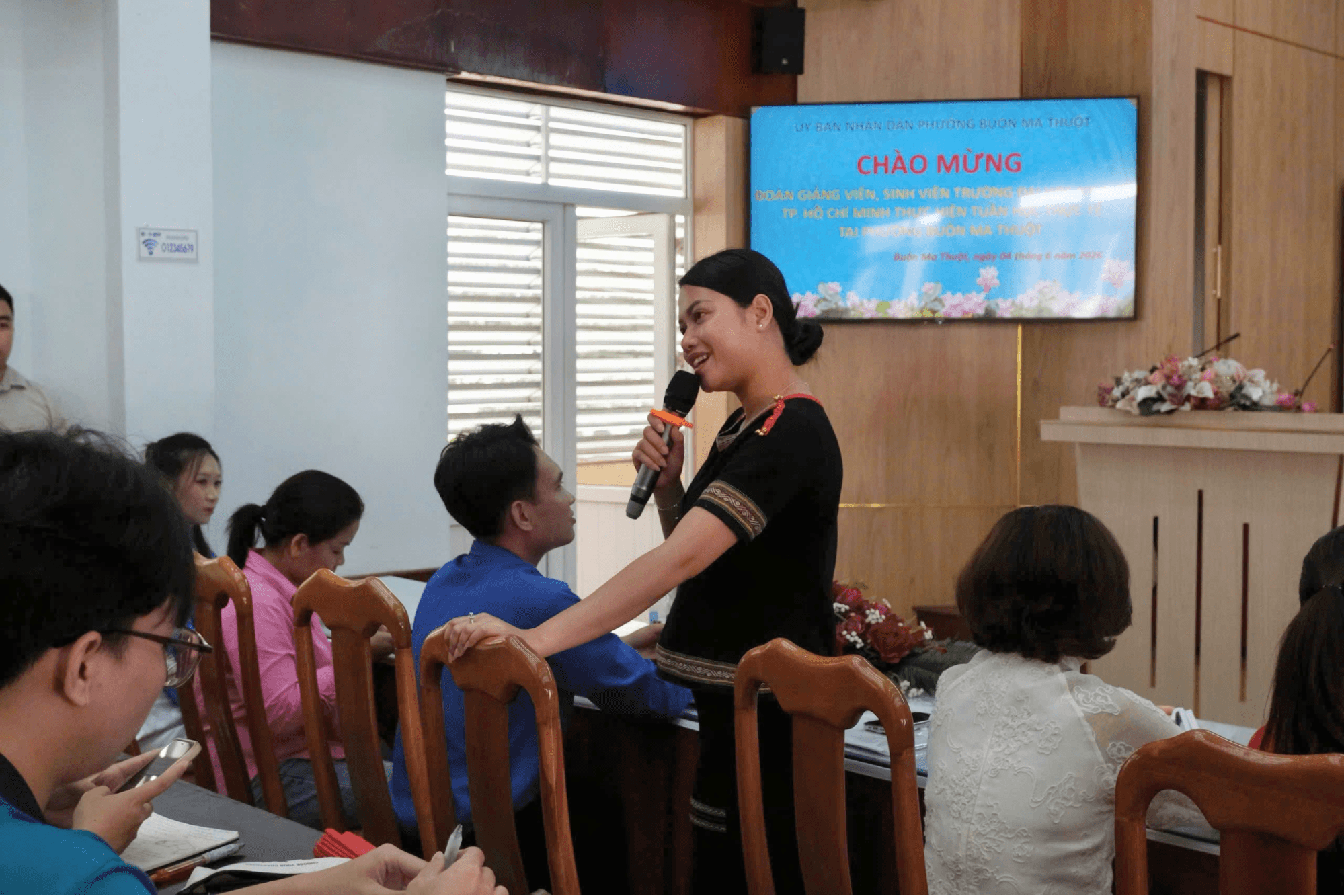
Local authority shares information regarding the issues and development challenges of Ako Dhong.
One of the distinctive features of the BAUD programme is that every design studio is built around a real site and a real-world challenge. Students are not only trained to design buildings; they also learn how to conduct field research, analyse contextual data, engage with stakeholders, and translate local knowledge into design strategies that respond meaningfully to place.
To broaden students’ perspectives and professional capabilities, studio themes and project locations are renewed each year. Through exposure to diverse contexts, user groups, and development challenges, students gain experience working on a wide range of topics—from vernacular architecture and heritage conservation to universal design, climate adaptation, smart city development, and sustainable urban futures. This approach enables students to develop interdisciplinary design thinking while building the practical competencies required in professional practice.
For students enrolled in Architecture StudioLab 1, the field trip to Buôn Ako Dhong was more than a data collection exercise. It was an opportunity to recognise that architecture is not simply about creating visually appealing buildings; it is about engaging in a dialogue with people, culture, and the environment to create meaningful places for living.
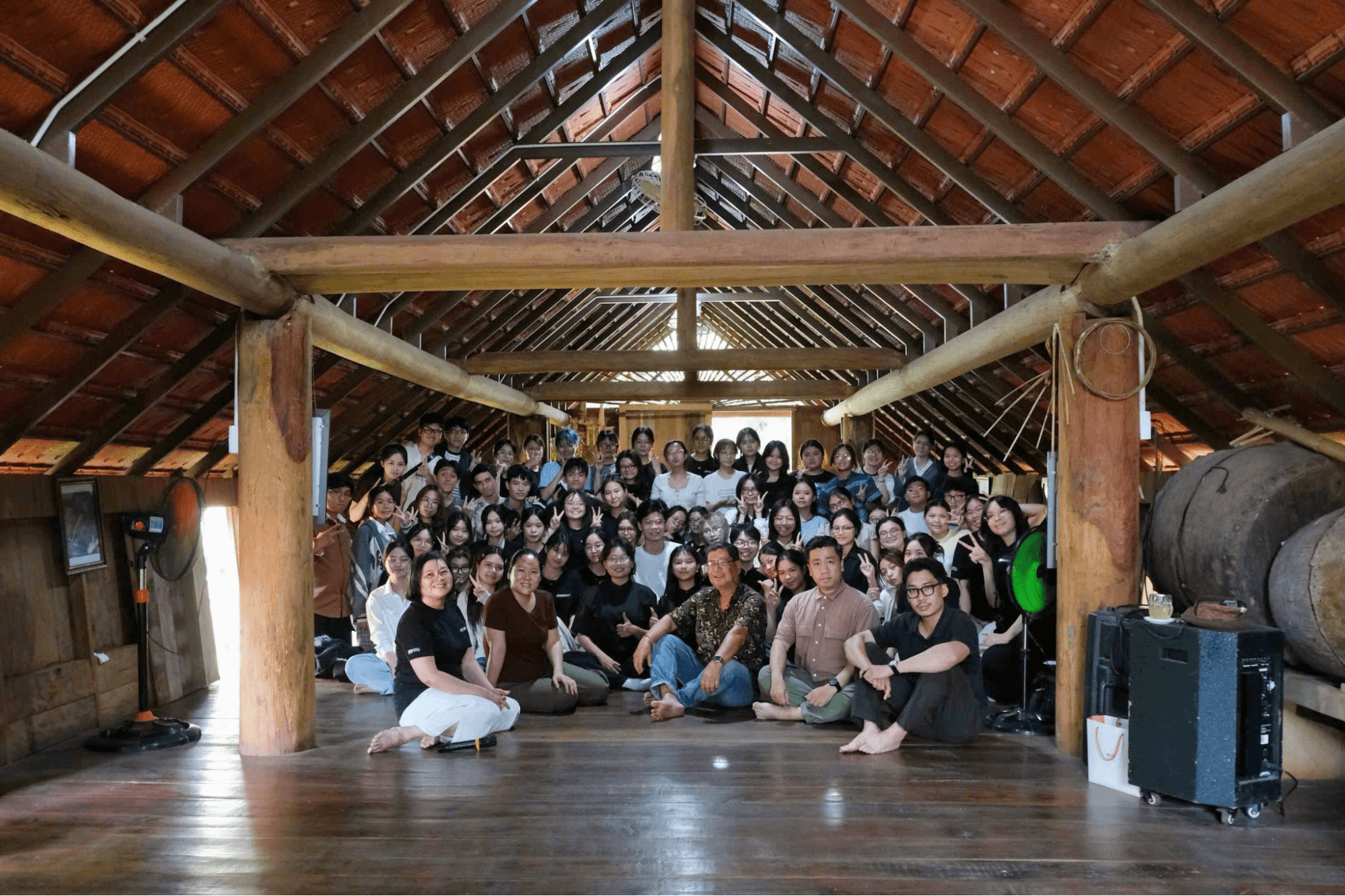
ISCM lecturers and students commemorating their field study experience at a traditional Êđê longhouse.
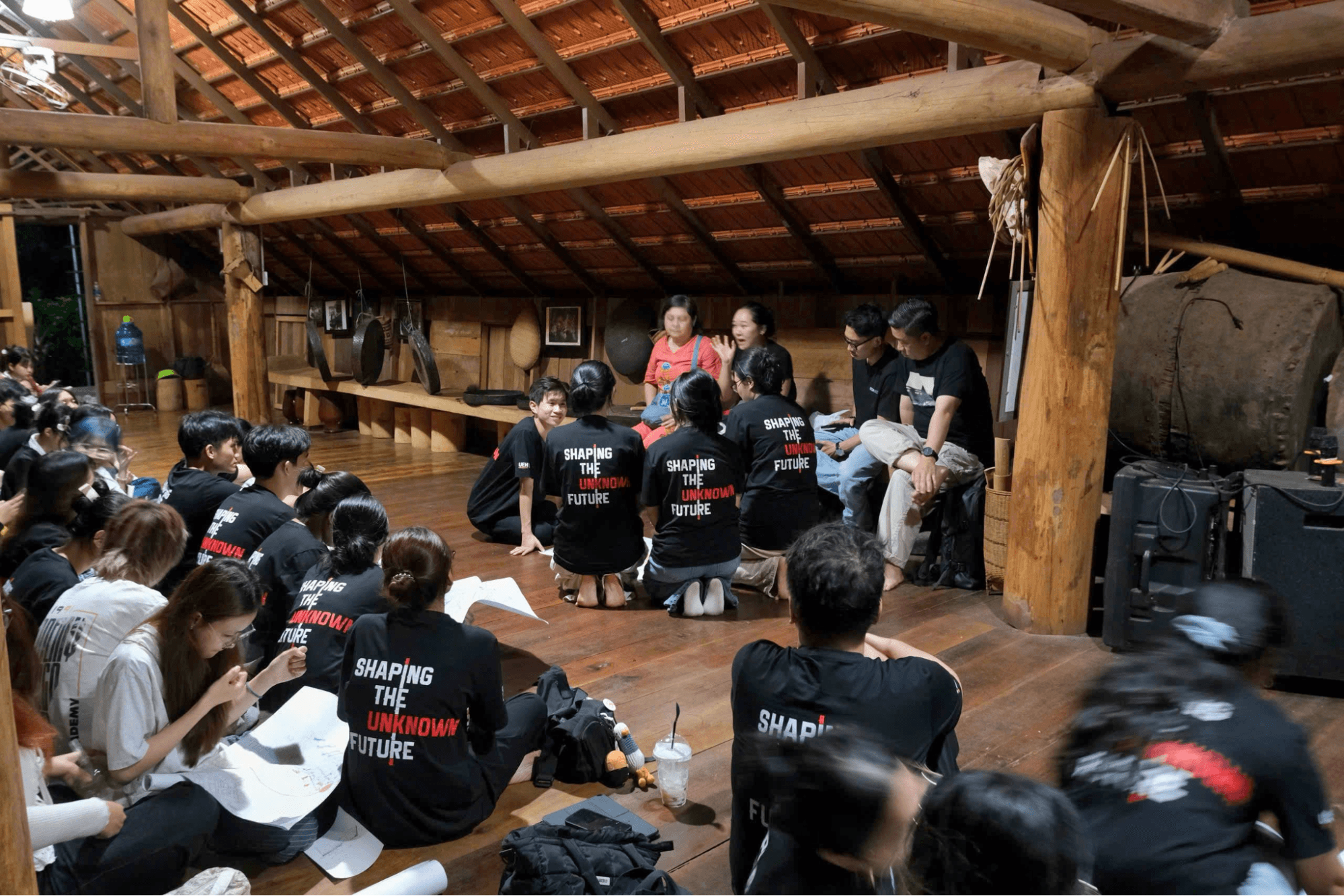
An evening review session where lecturers provided feedback and guidance on students’ project presentations and reports.
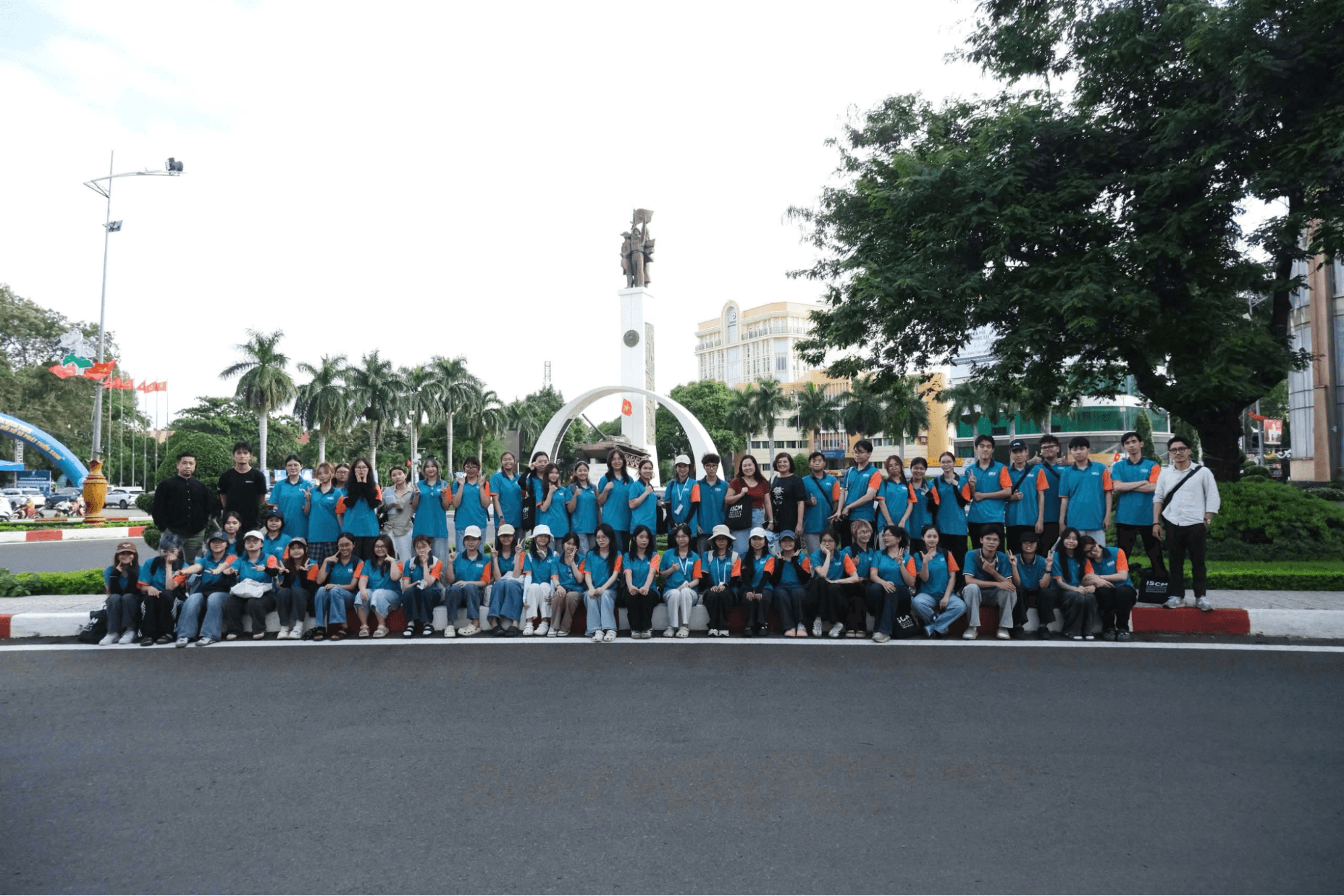
ISCM lecturers and students commemorated their field study experience at Ban Mê Intersection and the Victory Monument.
As the journey in Đắk Lắk comes to an end, the sketches, photographs, interviews, observations, and stories gathered from the field will become valuable resources for the next stage of design development. Drawing inspiration from the spatial intelligence of Êđê longhouses and the indigenous knowledge of the Central Highlands, BAUD students will continue exploring how contemporary housing can respond to climate conditions, respect cultural identity, and support more sustainable ways of living.
BAUD is not only about educating future designers. It is about nurturing architects and urban designers who are capable of observing, understanding, and addressing real-world challenges through creative design thinking, social responsibility, and meaningful engagement with communities.
Article and Photos: Institute of Smart City and Management (ISCM - UEH)